Mindfulness as a way out

Most people misunderstand mindfulness.

In most people’s mind meditation is a check-mark on the to-do list.

the most common refrain, and the refrain i used as a shield from the terror of mindfulness, and it is terrifying, is that “i cannot concentrate.”

this is because the modern mindset is one lived in the shadow of the ego. The internet in all it’s fantastical power has done much to help us, but spiritually it drains us.

Each day it unveils another horror perpetuated by man on man. It is easy to become disheveled and depressed at the sheer number of horrors. Not only that the various social media platforms program themselves to feed a steady serving of this bad news to us, as our minds are naturally problem solvers.

The problem with that is of course that these problems are nuanced, layered and complex. They require systemic solutions that will take years, and in the mean time we are ultimately powerless.

But the actual issue, is of course the modern human rarely pulls himself out of this world of symbols.

To Paraphrase Milton ” the mind is a place unto itself, it can make a heaven of hell or a hell of heaven.”

People fundamentally in this world of horrors, to-do lists and constant movement lose sight of the true goal of mediation.

Meditation is practice in waking up, over and over, each day knowing that it will never be the last time until we live this mortal coil. Mediation, is trying to stir yourself awake enough times so that at the end of your life you can look back at it and think yes I lived.

Mediation is a practice.

The best metaphor I heard about meditation was this ” meditation is like sweeping a floor. One does not sweep a floor once, and think there it is done, I shall never have to sweep the floor again. Meditation is the acceptance that though the floor is clean temporarily it will need to be swept again.”
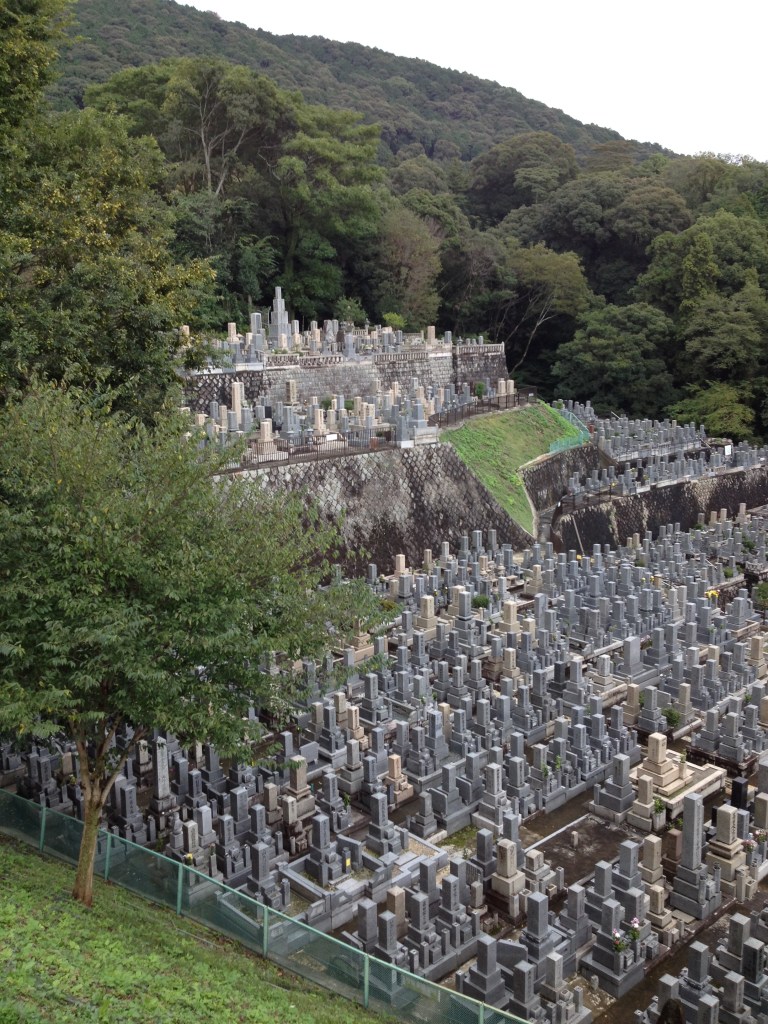
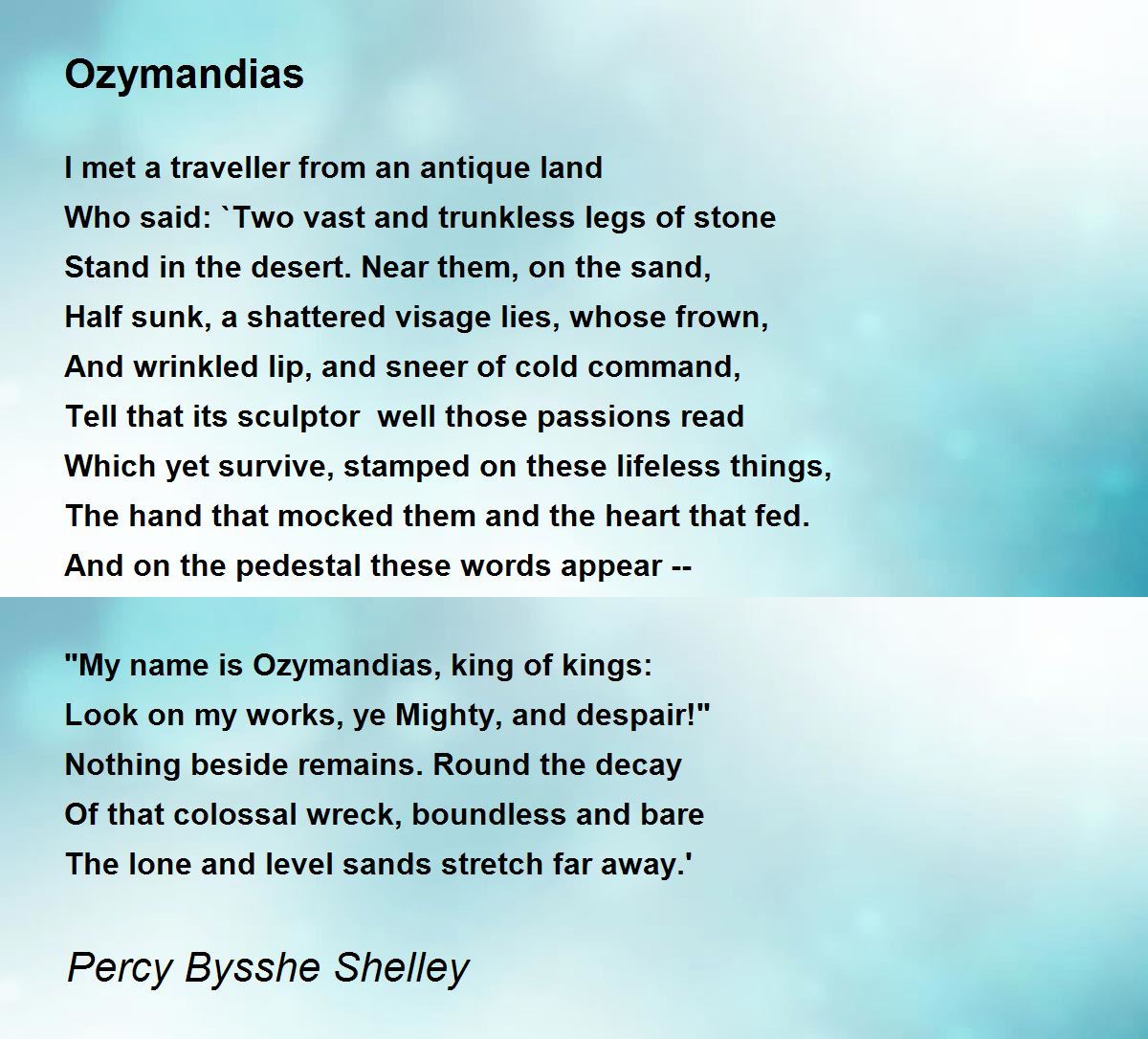
History is a store of ideas, some of them rotten…

Growing up my classmates often lamented about history. They said ” What is the point of learning the past.”

I think this is part of a bigger problem in education, schools rarely give students the full picture in which the piece they are currently learning sits, but I digress.

History comprehension is the key to understanding the now.

Take for instance the protests currently occurring world wide to oppose the murder of people of color by the United States’ police forces.

These events are by and large a product of nearly (if not more than) 500 years of racial discrimination, eugenic idealization and voter disenfranchisement. (voter disenfranchisement is part and parcel of US history but again, I digress)

I am not the right person to speak on this, I don’t claim to be. I am not a scholar of African American relations, but a simple google search, a skimming of Wikipedia, a trip to the library, they illuminate a dark and sinister web of self interested people all attempting to enforce policies that benefited them at the expense of communities of color.

What we are seeing now in our streets is the anger of a people systematically held underwater to drown, and that somehow survived, every so often being able to thrust their heads up and take a breath.

To this injustice, Anger seems like a perfectly justifiable response. History teaches us this.

History also teaches us, how empires fall, how they rise, how revolutions begin and are taken over. History teaches us empathy and understanding. History teaches us why today is today, and how we can change the future.

I lament those who forsake history, not because they are doomed to repeat it, that does happen, but because in doing so they give up agency. The past is teaching us why today is happening, and a better informed person is a more powerful person.

If you are lost and confused about why the people in the streets are angry. I’d advise you to go read some history.

Read about Emmett Till, read about Billie Holiday, and read about George Stinney, and if you aren’t angry, well then you might need to read some more.

The unfortunate truth is you won’t lack for content.

BLM.

Loss of Legacy Part 4

Standing in the dust of the east the men of the west clutched their pearls while laughing nervously as the Soviets crumbled slowly, their eyes wide with a silent fear.

For around 10 years or so, the world sat in a sort of of consistent and odd high , the 90s were a time where everything seemed possible, and the new century loomed.

2001 changed all of this. The slumbering giant of the Military industrial complex awoke. It looked upon the ruins of the twin towers and with pointed teeth grinned a corpse-like grin, one eye turned to Washington while the next turned to the middle east.

In this post terrorism United States, the long held belies learned in the cold war ramped up once again, they’d found a new enemy. In the cold and fear of the winter of 2001 the men in charge took advantage of that fact and plunged us into a now nearly 20 year old war.

The corporations that run the proxy war were the only victors.

The men who grew up in the shadow of the bomb shoveled young men like themselves, to a country that hated them, to a pointless war, and broke every law possible in a rampant quest to stave off the realization of what they’d done.

It is a curious aspect that people tend to grip harder to their untruths when presented with evidence to dispel it. The real truth was that the bomb simply unveiled our own human fragility, and in the blind fanaticism to get theirs before the world ended, the men and women of the past tipped off another slower, and more menacing threat.

Climate change.

In an Oedipean twist of fate, those who sought to escape death did so, the mega wealthy burned the planet down in the quest to quench their fear of death, to make the most of a dying world and in doing so caused the world to die.

Now older, they look back at their lost legacy and cringe. They poisoned the rivers, killed the animals, and crosscut the rain-forests. In the face of the very destruction they feared they turn away now from the truth, because they are ashamed.

What have they left behind? A boiling planet? A series of bleeding fractured drug war ravaged countries? An endless frivolous war?

The legacy lost has been found again, but it is not a legacy of peace and beauty, but one of conflict and destruction.

That is the final truth, you may put aside and not worry about what the future generations will think of you, but they will come and will judge you, whether your try or not.

The Loss of Legacy Part 3:

Several generations grew up faced with the prospect of total nuclear annihilation every waking moment. Many of their first memories might be the fear in their parent’s eyes, even if they grew up in the idyllic 1950s-60s. (Well the white people did, minorities in this time were facing incredible challenges alongside the idea of total nuclear annihilation.)

Children hid under desks, parent’s dug bunkers, and people whispered of communist infiltrators in the media, their governmental institutions, and neighborhoods. This all began to shape the way people saw the world and themselves.

Many people turned inwards to the world of symbols. They clung tighter than ever to the idea of salvation, damnation, and rapture. In the face of death the coming to god, in this case the Judeo-Christian one, was common, but the rise of many cults in the 1950-1990s was in my approximation no coincidence. Cult leaders simply tapped into the running vein of low level anxiety that religion soothes, and replaced the relatively benign ideas of salvation with one rooted in the capitalist system, the extraction of money from the most venerable.

Many turned towards the procurement of wealth now, at the cost of the future generations. Hyper-Capitalistic patterns emerged, and a zero- sum game mentality evolved. Salaries for those at the top ballooned, while workers at the bottom began to see their wages shrink in the face of inflation. In it’s place advertisers worked to promote debt as the healthy alternative. Sure, all of this was bad for the long term health of the economy, but if you are a wallstreet trader and have no idea if the world will blow up, who cares.

Many turned towards spiritual enlightenment and later escape using various chemical substances. Though many drugs were developed for noble goals, such as LSD, their prolonged and public use became little more than a dulling agent. The pain they dulled was the sudden abandonment of the future that the world collectively decided.

The Vietnam war stands as the nail to the proverbial coffin. To a cause that few but the hyper-capitalistic military industrial complex could support hundreds of thousands of young able bodied men only to be returned corpses or walking corpses. Broken men who saw no real sense to their sacrifice, and who were hated for simply following the rhetoric of nationalism.

To these returning victims of capitalism’s bloodiest expense report, what were they to do? Many turned to drugs, tuning out the pain of what they were made to do, while many more turned back and doubled down on the system that chewed them up.

So the system toiled under its own weight, until one day, the old adversary. The godless communists to the east simply fell apart. Leaving the massive cultural ideas, military production, and hyper-capitalistic infrastructure of the system build in the shadow of the enemy, high and dry.

Continued in Part 4:

The Loss of Legacy Part 2:

There is a saying, “Wise people plant trees in the shade of which they shall never sit.”

This is Legacy. In the 19th and 20th centuries there rose to power and prominence a collection of men who became exorbitantly wealthy through monopolistic capitalism. These men had names like Carnegie , Rockefeller and Nobel.

Yet you’d be hard pressed to remember these men as the brutal industrialists they were. Why? Because at some point at the back half of their life they became introspective. They looked upon all their mighty works and despaired. They saw how the world might remember them, and shook before it.

All three of the men worked tirelessly to re-write history into their favor, burring their sins under the good works that millions and billions of dollars can do, and these men largely succeeded. Nobel is no longer remembered as the merchant of death who built his empire off dynamite and munitions, Carnegie’s brutal steel magnate days are largely forgotten about and even contemptible old Rockefeller is met with a less harsh gaze.

This is common. Man when faced with his own mortality, and the idea of his legacy is often spurred to be seen in the best possible light. While some might see this as disingenuous, I see it as a natural psychological consequence of death. First you fly from it, then you accept it and attempt to become immortal through the persistence of memory, in the case of the very wealthy the collective persistence.

Moreover, examples of common people making plans for future generations can be found across time, culture and space. The roman aqueducts were built and expanded over 500 years. The people who began construction on these public works products could not have seen that far ahead, however they chose to work on them daily to benefit people they would never meet. This is cultural legacy.

However, as discussed in the previous blog post, the invention and use of the Nuclear Bomb for the first time instilled in many cultures, societies and individuals a sense of existential dread.

In the face of total nuclear annihilation, it suddenly made no sense to start projects that might benefit anyone even 10 years down the line. Suddenly, all that mattered was the here and now.

Continued in Part 3:

The Loss of Legacy: Part 1

We live in a strange world. A world where no one thought we’d make it through the 1960’s-1990’s. I recall my mother having the TV on one day, it was 1991, I was 3 years old, but I still can recall her looking at the TV in shock and awe. I would later learn the reason, or I should say understand what she was responding to. My mother was born in the heart of the cold war, and she watched her immortal, ever present enemy crumble on live television.

My mother like most Americans did Nuclear bomb drills, and the whole of the world went through an existential crisis. Existentialism was nothing new, individually, culturally, or even on a national level. However, in the face of Nuclear Annihilation, all of this seemed petty.

Suddenly with but a fraction of the sun’s power we discovered the first man made global existential threat, the Nuclear weapon. And if we want to be candid that is all a nuclear bomb is, a piece of solar energy brought here to terra firma.

The nuclear bomb still looms in the world, do not get me wrong, North Korea, and Iran both seek to bolster their political might with their own pieces of the sun.

However, the bomb dominated the lives of those who lived and were born from 1955-1991. The USSR stood posed to destroy the world, and the USA went along with them piling the bomb high and hard, making more and more destructive weapons. Each side bragged about and showed of how powerful their own arsenal was in an ever present game of chicken that would result in the complete annihilation of the human race. If not from hellfire from nuclear winter that would soon follow.

Starvation is never a pretty sight, and the nuclear winter that would follow a nuclear war would starve billions. The human race suddenly faced it’s own doom, brought on not by an army or a pestilence but by a fraction of a fraction of a star’s power, and they stood, as a babe before the storm, naked and afraid.

With this in mind, we began to see the decline of legacy, and the rise of I have to get mine now, and the future is none of my concern.

And this makes sense, why plan for a future that from all the media, from all the nervous chatter, might never come?

Continued in part 2: